
peticaopublica.com & participacao.parlamento.pt
Online petition platforms as tools for citizen participation
RESEARCH & DEVELOPMENT
4/20/20264 min read
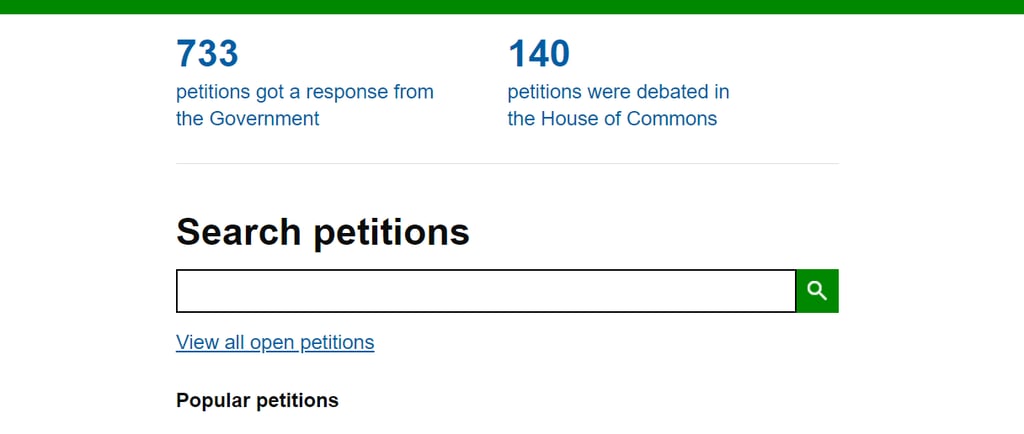
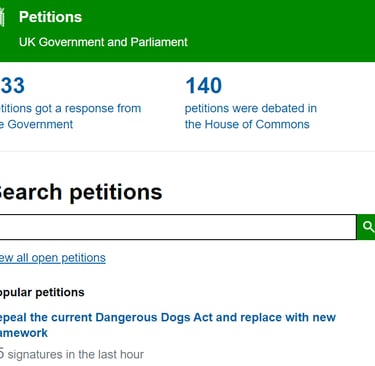
From Expression to Integration: Petition Platforms as Civic Participation Infrastructure
A study on the evolution of civic engagement from public signalling to institutional mechanisms
This article analyses peticaopublica.com and participacao.parlamento.pt as components of the same transformation in digital civic participation. The first represents an infrastructure of distributed, informal expression, while the second embodies an institutional channel for integrating citizen participation into formal legislative processes. Together, they illustrate a critical transition: from the expression of opinion to the formal incorporation of collective will into governance systems.
The structural problem: participation without continuity
Contemporary democracies face a growing imbalance between civic expression and institutional impact.
Citizens can:
express opinions
mobilise causes
organise collective support
But they often cannot:
translate mobilisation into effective political action
integrate civic energy into formal decision-making processes
The result is a structural rupture between:
social participation
and legislative process
Petitions as civic technology
Digital petitions are one of the most accessible forms of civic participation.
Platforms such as peticaopublica.com enable:
free creation of petitions
collection of signatures
amplification of causes
rapid, distributed mobilisation
They function as an infrastructure of collective signalling:
they make visible that a group of citizens shares a position.
However, this visibility does not necessarily imply institutional impact.
The limit of expressive participation
Despite their importance, informal petition platforms present structural limitations:
lack of integration with legislative processes
absence of mandatory institutional response
difficulty converting volume into political action
This produces a recurring pattern:
high mobilisation → low transformation
Participation exists, but does not pass through the system.
Institutional participation as infrastructure
The platform participacao.parlamento.pt represents a different layer: the formalisation of participation within the legislative system.
Here, citizen initiatives and contributions can:
be submitted directly to Parliament
comply with formal requirements
trigger institutional procedures
be analysed and discussed within legislative contexts
Participation shifts from expression to procedure.
From visibility to processability
The key difference between the two platforms can be understood as a shift in the state of participation:
peticaopublica.com → participation as visibility
participacao.parlamento.pt → participation as processability
This introduces a critical distinction:
being seen ≠ being processed
The first platform generates signals.
The second integrates signals into formal mechanisms.
The participation pipeline
When analysed together, the two platforms suggest an implicit model of civic flow:
Emergence
citizens identify an issue and initiate a petitionAggregation
the cause gains public visibility and supportFormalisation
the initiative is structured for institutional entryProcessing
Parliament analyses, debates, and responds
This “pipeline” is neither fully automated nor guaranteed — but the platforms represent its functional extremes.
Participation as layered infrastructure
This model reveals that civic participation is not a single system, but a set of layers:
expressive layer (mobilisation, opinion, visibility)
institutional layer (rules, validation, process)
Democratic effectiveness depends on the connection between these layers.
Without connection:
participation becomes symbolic
With connection:
participation becomes operational
Implications for digital governance
The coexistence of these platforms raises important questions:
Participation requires continuity
Without transition mechanisms, civic expression loses impact.Institutional integration is as important as mobilisation
Support alone is not enough — it must be processed.Interfaces become governance mechanisms
Platform design determines what is politically possible.
The historical importance of petitions
Petitions are one of the oldest structured forms of political participation, predating modern democratic systems.
Historically, they allowed citizens — often without formal representation — to present grievances, demands, or proposals directly to those in power. In several contexts, such as post-Glorious Revolution Britain (1688), the right to petition was recognised as a mechanism for limiting authority and protecting individuals from retaliation, later formalised in the Bill of Rights of 1689.
With the development of representative democracies, petitions were incorporated as a complementary mechanism of participation between electoral cycles.
Across modern history, petitions have played significant roles in major social and political movements:
In the 19th-century abolitionist movement, mass petitions were used to pressure parliaments into abolishing slavery, demonstrating organised public support.
In suffrage movements, petitions were essential in legitimising demands for women’s voting rights, making previously marginalised claims visible at scale.
During the 20th century, anti-nuclear movements across Europe used petitions to contest nuclear weapons and energy programmes, contributing to policy shifts and the emergence of new political agendas.
More recently, environmental and civil rights campaigns have used digital petitions as tools for rapid aggregation of support and public pressure.
These examples show that the impact of petitions does not lie solely in direct effectiveness — a petition rarely changes policy on its own. Their role is more structural:
to transform diffuse concerns into quantifiable collective signals.
Petitions function as mechanisms for:
aggregating social will
legitimising emerging causes
introducing issues into public agendas
However, their effectiveness has always depended on a critical factor: their connection to decision-making systems.
Historically, many petitions were ignored when no institutional channels existed to absorb them. Others, when connected to social movements, political parties, or legislative processes, achieved meaningful impact.
Digital contexts amplify this dynamic. Lower participation costs enable larger and faster mobilisation, but also make a persistent limitation more visible:
visibility does not guarantee consequence.
And this is where the structural problem identified at the beginning of this article becomes evident.
Petitions have always been effective at generating collective expression.
The challenge — then and now — lies in continuity.
Without integration into institutional mechanisms, they remain signals.
With integration, they become process.
Conclusion
The platforms peticaopublica.com and participacao.parlamento.pt are not redundant — they are complementary.
Together, they represent two fundamental moments of democratic participation:
the capacity to express
and the capacity to integrate that expression into formal processes
Across history, petitions have proven effective at transforming individual concerns into collective signals. But they have also consistently revealed a structural limit: without connection to decision-making mechanisms, those signals rarely produce consequences.
It is precisely this rupture — between expression and impact — that continues to define the challenge of contemporary civic participation.
The real challenge is not creating more participation channels, but ensuring continuity between them.
In the context of digital governance, participation is no longer just a formal right. It depends on infrastructures that allow:
expression to become process
and process to become decision
Without this continuity, participation remains visible but ineffective.
With it, it becomes operational.
And at this point, the argument returns to where it began:
there is no lack of participation —
there is a lack of integration.
The future of civic participation is not only about giving citizens a voice,
but ensuring that this voice can pass through the system — and have effect.
Backed by Thendor
Testbed and business expansion
Phone
nuno.amiar@umaboaquestao.pt
+351-91-293-1493


Socials
Contacts
Built in the open for the public good. We invite civic innovators, technologists, and policymakers to collaborate and innovate together

