
Institutionalization of Citizens’ Assemblies
Implementation of Citizens’ Assemblies in Portugal, including a pilot project, an oversight committee, and a transparent hybrid lottery-based selection system for participants
PETITIONS
4/22/20264 min read
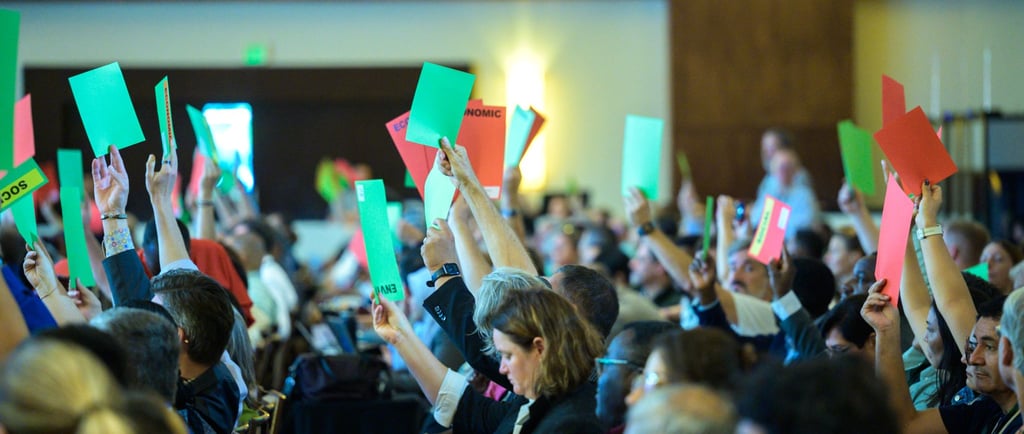
Advancing Citizens’ Assemblies in Portugal: A Proposal for Democratic Innovation
We, the undersigned citizens, hereby express our support for the implementation of Citizens’ Assemblies in Portugal, as proposed by the 13th Citizens’ Commission – Spatial Planning, Public Administration and Local Government, promoted by the Democracy 2.3 Association, established on 27 May 2022.
The original proposal can be consulted here:
https://www.os230.pt/wp-content/uploads/2025/02/13_01-Proposta-PP-Assembleias-de-Cidadaos.pdf
Considering that:
a) Citizens’ Assemblies are a democratic innovation aimed at strengthening participatory democracy, complementing traditional mechanisms of political decision-making.
b) This model directly involves civil society, producing informed and representative recommendations.
c) The institutionalization of Citizens’ Assemblies would allow for continuous civic participation in the political process, going beyond elections and traditional participatory mechanisms, enriching democracy and making it more inclusive.
d) The selection of participants through random sampling ensures fairer and more balanced representation, guarantees the inclusion of marginalized groups, and allows more voices to be heard.
e) A citizens’ panel, selected through modern random sampling techniques to reflect the diversity of Portuguese society, meets over several sessions to debate and propose solutions to complex political issues.
f) This process, supported by experts, data analysis, and public consultations, results in more informed and sustainable decisions, promoting public policies that better respond to society’s concerns.
g) The usefulness of Citizens’ Assemblies is clear in addressing complex issues, such as institutional reforms, which require in-depth analysis and debate.
h) By promoting detailed discussions, these assemblies contribute to the formulation of more stable and long-lasting policies, while also reducing polarization and increasing public acceptance of decisions.
i) The direct involvement of citizens in the deliberation process not only promotes transparency and inclusion, but also helps restore trust in institutions, reducing the perceived gap between politicians and citizens.
Thus, we request:
1 - The implementation of a pilot project of Citizens’ Assemblies across the national territory, at local level in cooperation with Parish Councils, as a precursor to formal institutionalization, as proposed by the 13th Citizens’ Commission.
2 - The creation of a Citizens’ Assemblies Monitoring Committee (CAAC), responsible for defining the implementation model, contacting and coordinating with organizing entities, advising on the necessary procedures, and ensuring effective communication of the process.
3 - The evaluation of the Pilot Project implementation by the CAAC, through indicators related to participant selection and incentive mechanisms, number of participants, organizational format of the Citizens’ Assembly, discussion model, and implementation of deliberations arising from the Citizens’ Assemblies.
4 - The preparation of an evaluation report on the Citizens’ Assemblies Pilot Project by the CAAC.
Reasons for the Petition:
Citizens’ Assemblies have immense potential to revitalize democracy, offering a space that rebuilds the connection between citizens and democratic participation, while restoring trust in public institutions in times of democratic crisis. This process not only broadens collective understanding of the challenges faced by policymakers, but also offers a unique opportunity for political representatives to connect with citizens’ experiences that tend to remain unexplored.
They provide a unique opportunity for ordinary citizens to explore the complexity of public policy, hear multiple perspectives, and deliberate together to reach new consensus. Deliberation in these assemblies mobilizes collective intelligence, enriching solutions and strengthening trust and legitimacy in decision-making in the eyes of citizens.
Important additional note:
Article 8.1-A below, regarding the Lottery Process, complements the proposal drafted during the Os 230 project, by ensuring a transparent, secure, and auditable mechanism for the random selection of participants in Citizens’ Assemblies. This hybrid process — combining a public physical draw with blockchain registration — ensures immutability, verifiability, and broad transparency, reinforcing the legitimacy and trust in the selection of participating citizens.
Article 8.1-A
(Hybrid Lottery Process and Open Blockchain Registration)
Hybrid Methodology
1.1. The selection of participants by stratified random sampling combines:
a) Physical component — public draw using a transparent urn with uniform numbered tokens, conducted in a public session and manually auditable;
b) Digital component — generation of random numbers directly on a permissionless open blockchain, through a verifiable random function (VRF) that uses the number drawn in the physical component as input seed, ensuring immutability and verifiability.Public Draw Session
2.1. The physical draw takes place in an accessible location, with at least 15 days’ prior notice on the Convoking Entity’s portal.
2.2. The following must be present:
a) Two representatives of the Supervisory Council;
b) The technician responsible for process security;
c) A notary or public registry officer, where applicable.
2.3. The entire process is video recorded, timestamped, and broadcast live.Oracle and Blockchain Registration
3.1. An independent oracle — implemented as a smart contract — receives the physical draw data (hash of results and metadata) and invokes the on-chain VRF, fed by the physical seed, to generate and record random numbers on the blockchain.
3.2. The smart contract issues a public record with date, draw identifier, and number of participants, allowing any citizen to verify the result directly on the blockchain.
3.3. The contract code and process details are made public, ensuring full transparency.Security and Audit
4.1. The smart contract and oracle operation are audited before first use by two independent teams.
4.2. Official timestamps are used to prove data existence at the time of the draw.
4.3. The selected blockchain network must offer high decentralization and resistance to manipulation.Transparency and Access
5.1. On the official portal, the following are made available in open format:
a) Draw video with verification hash;
b) Reference to the block where registration was recorded;
c) List of participants (with pseudonyms) and aggregated demographic data;
d) Pre-draw voter list, encrypted and aggregated by strata, for consultation and validation of the process.
5.2. Any citizen, without credentials, may:
a) Verify video integrity via hash;
b) Consult the draw record directly on the blockchain;
c) Verify that their name was correctly included in the pre-draw voter list.Supervision and Contingency
In case of anomalies (e.g., hash mismatch or transmission failure), a new registration is carried out within 48 hours.
Sign this petition to support the implementation of Citizens’ Assemblies in Portugal!
LINK DO PETITION: https://peticaopublica.com/pview.aspx?pi=Assembleia-Cidadaos
Backed by Thendor
Testbed and business expansion
Phone
nuno.amiar@umaboaquestao.pt
+351-91-293-1493


Socials
Contacts
Built in the open for the public good. We invite civic innovators, technologists, and policymakers to collaborate and innovate together

